

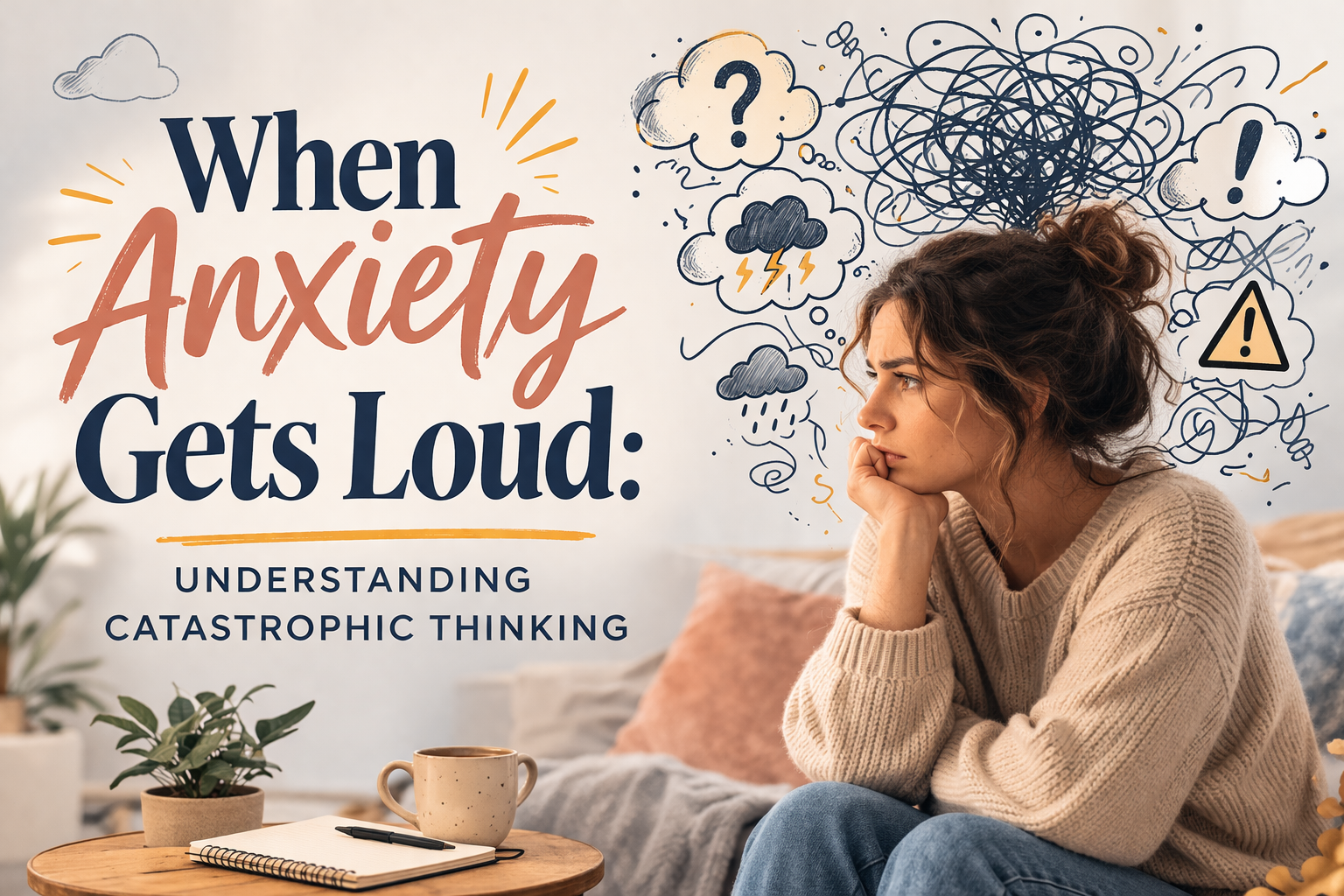
When Anxiety Gets Loud: Understanding Catastrophic Thinking
Anxiety is a natural part of being human. It’s the body’s built-in alarm system designed to keep us safe, alert, and prepared for danger. But sometimes, that alarm system gets a little too loud.
Instead of helping us respond to real threats, it starts reacting to everyday situations as if something is about to go terribly wrong. A small worry turns into a worst-case scenario. A simple “what if” quickly spirals into “this is going to be a disaster.”This pattern is known as catastrophic thinking, and it’s one of the most common ways anxiety shows up in our daily lives.
What Is Catastrophic Thinking?
Catastrophic thinking is when the mind automatically jumps to the worst-case scenario, often without enough evidence to support it.
It happens quickly and can feel almost automatic, like your thoughts are running ahead of you.
It might sound like:
- “This headache must be something serious.”
- “If I make a mistake, everything will fall apart.”
- “Something bad is going to happen, I just know it.”
In the moment, these thoughts feel real, urgent, and convincing. Your body reacts as if the threat is already happening.
But in many cases, these are not facts; they’re fear-based predictions.
Understanding this difference is an important first step in learning how to respond to anxiety, instead of being controlled by it.
In the next post, we’ll take a closer look at how anxiety and catastrophic thinking work together and why they can feel so hard to break.